|
 Bonsai Bonsai |
general | styling | pruning | repotting | Ginkgo chichi bonsai | gallery Ginkgo bonsai photos | bonsai links | reactions from readers and videos
| . |
 |
|
 |
| ... |
|
|
 |
|
| . |
| . |
| In
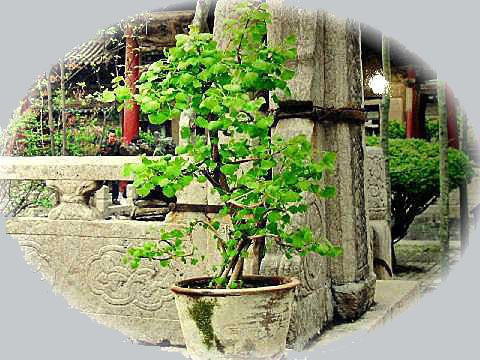
China using aerial chichi for propagation has a long tradition. In places
like Chengdu, Sichuan Province, the Taoist priests cut down these stalactite-like
branches from the bases and planted them in pots. Eventually they grew
into miniature plants (penjing) as commercial ornamentals. This practice
has been carried on for generations.
An old Chinese legend: It is said
that when Emperor Kao Tsung moved from Kaifeng in the north to Nanking
and Hangchow in the south in 1127, the imperial cavalcade crossed the Yangtze
River into southern Kiangsu. Coming to a town called Chen I, near the city
Kunshan between Soochow and Shanghai, an official named Kung I, a native
of the northern capital Kaifeng, picked a branch of a Ginkgo, stuck it
into the ground and prayed that if the branch lived, he would settle there.
|
. | The
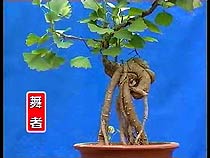
great penjing master, Hu Yunhua, published a photo of a ‘stalactite’ Ginkgo
penjing in 1987, titled ‘Single Peak Piercing the Clouds’ to which he added: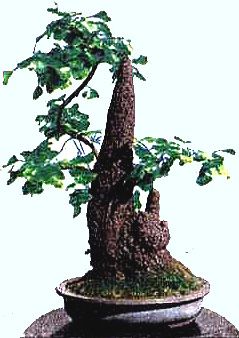
'This penjing
created by an artist of the Sichuan School displays a highly unusual shape.
The trunk resembles stalactite, a mineral formed through limestone corrosion.
No human effort could possibly sculpture this kind of bole.
|
| . |
| .
. Basal chichi forming is stimulated by conditions of continuous stress over a long period of time. Examples can be found on the Sumter plantation in South Carolina where about 10 million Ginkgo trees are cultivated for the leaf production. Trees of about 5 years old are cut back to near ground level and many are pushed over and partially uprooted by the harvesting equipment. In this way you may create multitrunked Ginkgo bonsai that mimic the form of trees growing naturally on steep, eroding mountain slopes. With proper training such “basal chichi” bonsai can develop into a “forest” of stems, like a group planting of seedlings but with a more rugged, individualistic appearance. * More about Ginkgo chichi bonsai in: Del Tredici P, Ginkgo chichi in nature, legend & cultivation, International Bonsai - 25, no.4, 1993. About chichi you can read more on my Tree-page. |
| . |

Bonsai Arboretum Biot, France Cor Kwant |
Bonsai Arboretum Biot, France Cor Kwant |
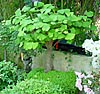
Bonsai Arboretum Biot, France Cor Kwant |
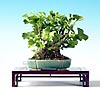
Shohin Higuchi Takeshi |
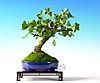
Shohin Higuchi Takeshi |
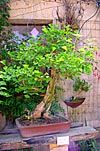
Bonsai Arboretum Biot, France Cor Kwant |
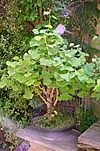
Bonsai Arboretum Biot, France Cor Kwant |
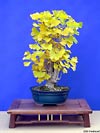
fall colour Chris Guise |
Atsuko Kato |
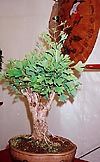
Atsuko Kato |
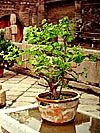
Xi'an, China Marc Bautry |
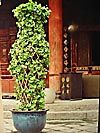
Xi'an, China Marc Bautry |
Hortus VU Amsterdam Cor Kwant |
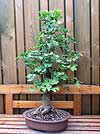
Eric Cuijpers |
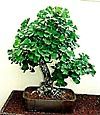
Bot. garden, Montreal Liviu Craciun |
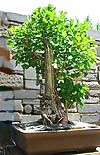
Huntington Bot. gardens, Pasadena, CA Colin Swales |
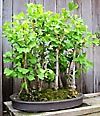
Huntington Bot. gardens, Pasadena, CA Colin Swales |
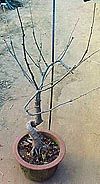
China HeMeng |
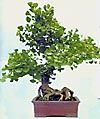
China HeMeng |
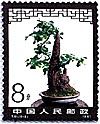
Stamp People's Republic of China 1981 |
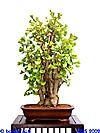
Redwood Empire Bonsai Society TreeBay.com |
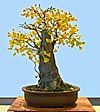
Golden State Bonsai Federation TreeBay.com |
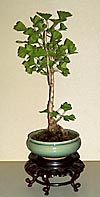
Ginkgo 'Tubifolia' Nigel Kent |
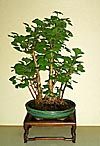
Ginkgo forest Nigel Kent |
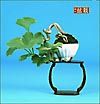
Han kengai Tengu |
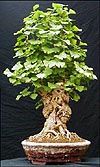
Chokkan Paul of the Tree Amigos |
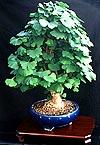
Thomas J. |
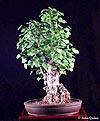
John Quinn |
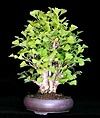
Wolfgang Putz |
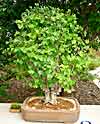
Mark Fields |
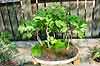
Parc Oriental, Maulévrier France Cor Kwant |
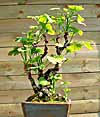
Daan Giphart |
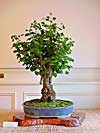
David Yedwab |
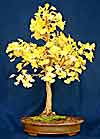
Gary Swiech |
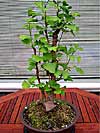
Paul Wolters |
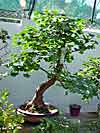
Museo del Bonsai, Marbella Spain Cor Kwant |
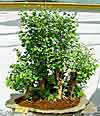
Museo del Bonsai, Marbella Spain Cor Kwant |
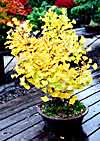
Kyoto Botanical garden Japan Sando Tomoki |
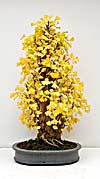
Dan Barton |
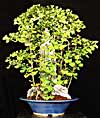
Mike Page |
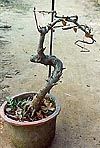 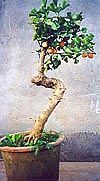
China HeMeng |
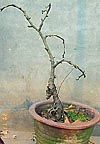 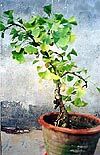
China HeMeng |
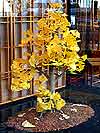
Wagashi art: Ginkgo 'bonsai' Japan 2007 |
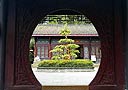
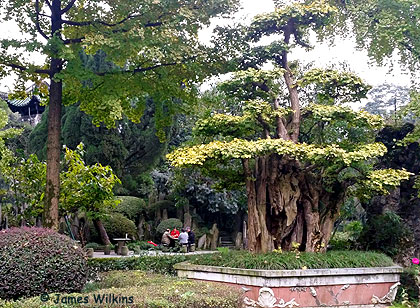
Penjing (dwarf) Ginkgo trees Qingxi garden, Sichuan China James Wilkins |
Please email me your Ginkgo bonsai information!!
        |
Reactions
from readers and videos
Ginkgo bonsai
do well with leaf trimming. Here in Washington State, USA I leaf
trim anytime from last week of May to first week of June (usually June).
Leaf trimming causes a new set of smaller leaves to grow. Leaf trim every
leaf on the tree. Cut the leaf stem half way between the base of the leaf
and stem attachment. Leave the half stem on the tree. It will dry and fall
off. - Tom Phelan
Video
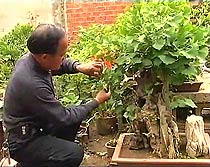
Ginkgo bonsai nursery in China
This video shows a bonsai nursery
in China that grows Ginkgo bonsai trees.
You can see stunning examples
of Ginkgo trees. Also a demonstration of pruning, grafting and more.
|
|
|
 Dwarf (Penjing) Ginkgo, China
|
 |
|
please visit my YouTube channel with many videos. |

© Cor Kwant 




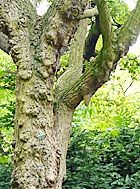
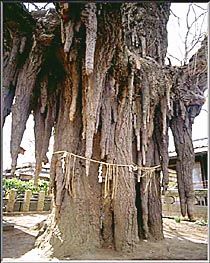 In
Japan many of the Ginkgos of over 100 years old or older produce aerial
chichi. In Japan they are called “chichi icho"
= chichi Ginkgo (chichi means nipple or breast), in China "zhong-ru"
(meaning stalactite). Such trees can provide propagation material to grow
a Ginkgo chichi bonsai. Female trees with large aerial chichi usually get
no seeds.
In
Japan many of the Ginkgos of over 100 years old or older produce aerial
chichi. In Japan they are called “chichi icho"
= chichi Ginkgo (chichi means nipple or breast), in China "zhong-ru"
(meaning stalactite). Such trees can provide propagation material to grow
a Ginkgo chichi bonsai. Female trees with large aerial chichi usually get
no seeds.